


English
 6 min Reading time
 It doesn't happen often, but sometimes the electricity price on the spot market drops so far that you would have to pay for feed-in! May 1, 2026 was such a day: the minimum price that day was minus 50 cents per kWh. This means that people with a dynamic contract from their energy supplier had to pay approximately 36 cents per kWh (= - 50 + 14 cents taxes) at that time for the energy they fed back. What does that mean for you and how can we best deal with such a situation?
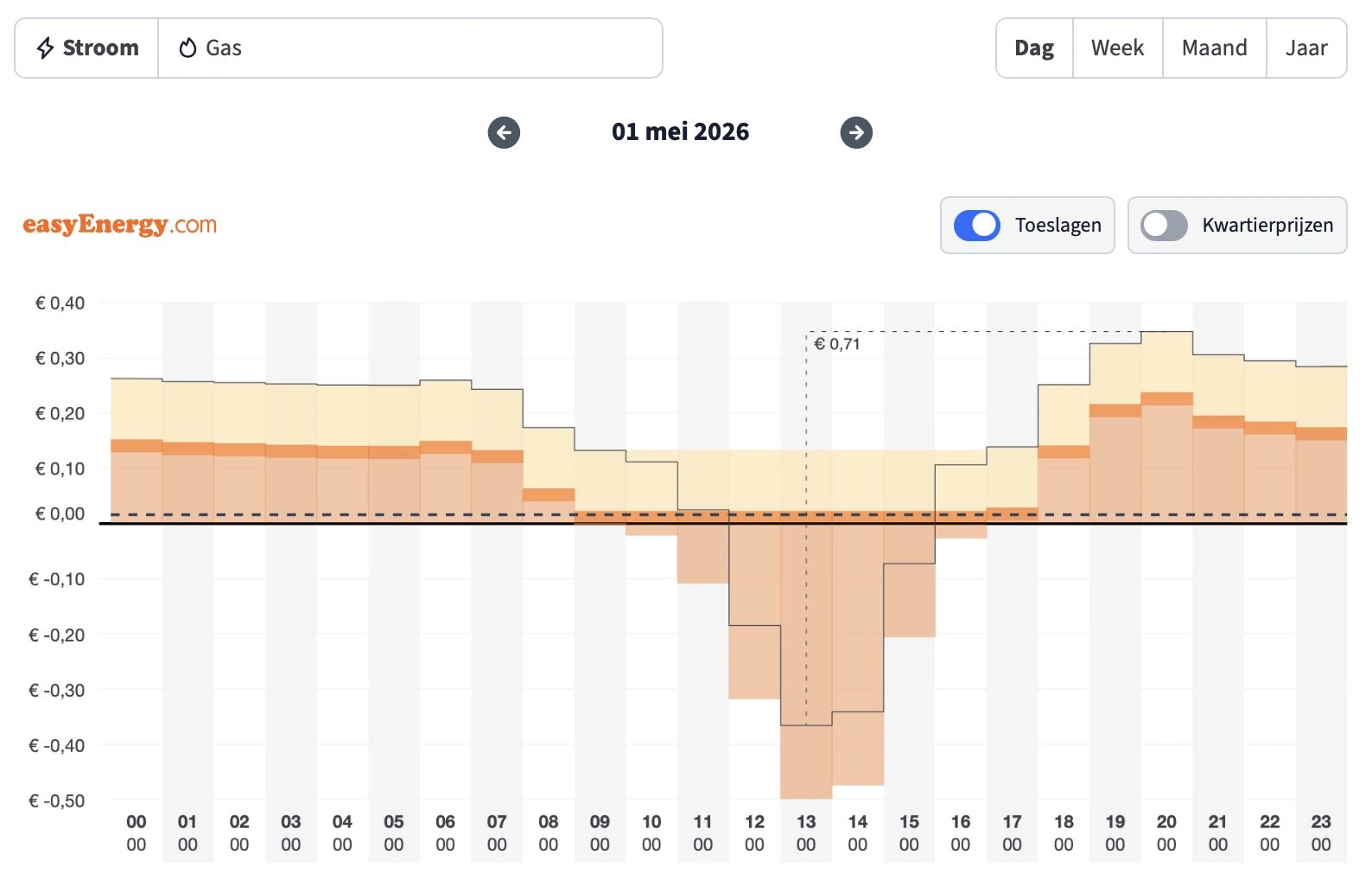
On May 1st the electricity price dropped below zero, meaning payment was required for feed-in between 12 and 4 (source: Easy Energy)
First some context: negative electricity prices occur when the supply of electricity is greater than the demand. Supply is high when there is both plenty of sun and plenty of wind: then the electricity grid is flooded with electricity from solar panels and wind turbines. As for electricity demand: it is low during the day on weekends or on holidays. However, May 1st was a Friday and a regular working day for us in the Netherlands. But in the rest of Europe, May 1st is a public holiday: the surplus electricity could therefore not be exported to our neighboring countries because they had no need for it. Result: the price dropped far below zero.
An average PV system would normally have fed back about 7 kWh that day at those negative prices between 12 o'clock and half past three. At an average of -25 cents over that period, the loss due to negative prices would therefore have been about €1.75. Not directly a huge loss, but still: it doesn't feel good to throw away money unnecessarily.
Most people who have taken out a dynamic electricity tariff with their energy supplier do so because they have home batteries. And most of our customers with home batteries have an SMA system, where the Sunny Home Manager controls everything based on those tariffs.
What we saw on May 1st is that when the Sunny Home Manager is in charge of a system, it doesn't completely stop feed-in when the price is negative. What it does try to do is charge the battery as much as possible. This means that in the morning, until the electricity price goes into the red, the surplus electricity is fed back to the grid (and not stored). From the moment the price drops below zero, the battery is filled with both solar power and grid power. But once the battery is full, the surplus is fed back to the grid again, despite the fact that it costs money instead of earning it at that time.
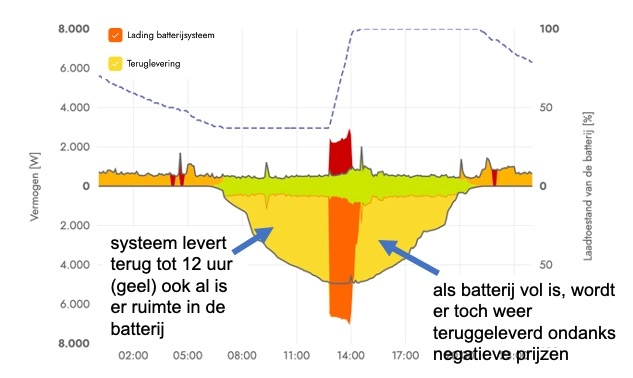
Here we see what happens with very negative electricity tariffs. Until about 12 o'clock feed-in continued (yellow), then the battery was quickly charged with both grid power (red) and solar power (green). When the battery was full, feed-in still occurred (source: ennexOS)
The only way to avoid costs at that moment is to stop the feed-in yourself or turn off the inverter completely. Via this link you will find the steps to do this manually (and don't forget to undo them when the electricity price becomes positive again!)
In SMA systems without a Home Manager in the distribution panel, inverters can be shut down remotely via the ennexOS portal. You can find more details in this article.
SolarEdge has devised a simple, automated solution for these moments: via the My SolarEdge app you can indicate that you have a dynamic tariff. When the price becomes negative, the inverter automatically shuts down, and when the price becomes positive again, it starts up automatically. Very convenient! More information about this system can be found here.
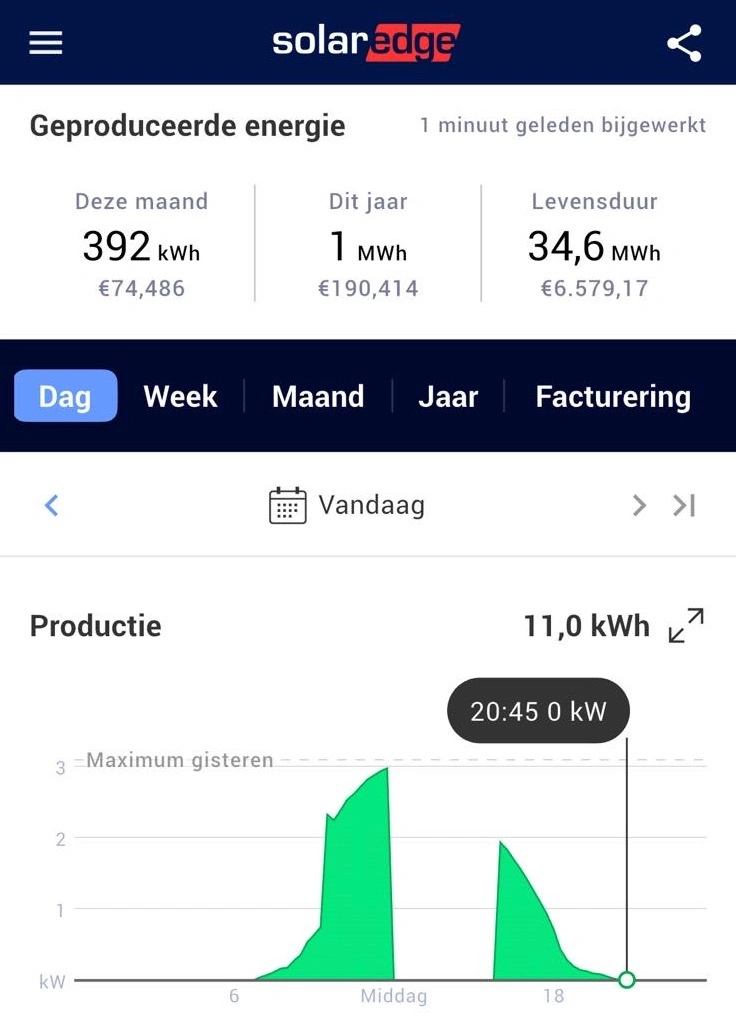
With SolarEdge, a PV inverter can automatically shut down when the electricity price is low
A new development regarding dynamic tariffs is a functionality called the 'Energy Maximizer' by SMA. When this function is activated, you can choose a dynamic tariff for feed-in in ennexOS (and no longer only for consumption, as is now the case). The system can subsequently also actively feed back from the batteries to the grid when the feed-in tariff is high enough to make it worthwhile. The Energy Maximizer can also ensure that the solar panels no longer feed back to the grid if the feed-in price is negative by essentially 'curtailing' the PV panels.
The function has already been rolled out to a number of test customers and will be officially introduced soon, but note: they will charge money for it! It would be about €7 per month in subscription costs. A free trial period of 90 days would be possible first, so you can then see if it's worth purchasing this function. As soon as the function is available to everyone, we will write about it in the newsletter.
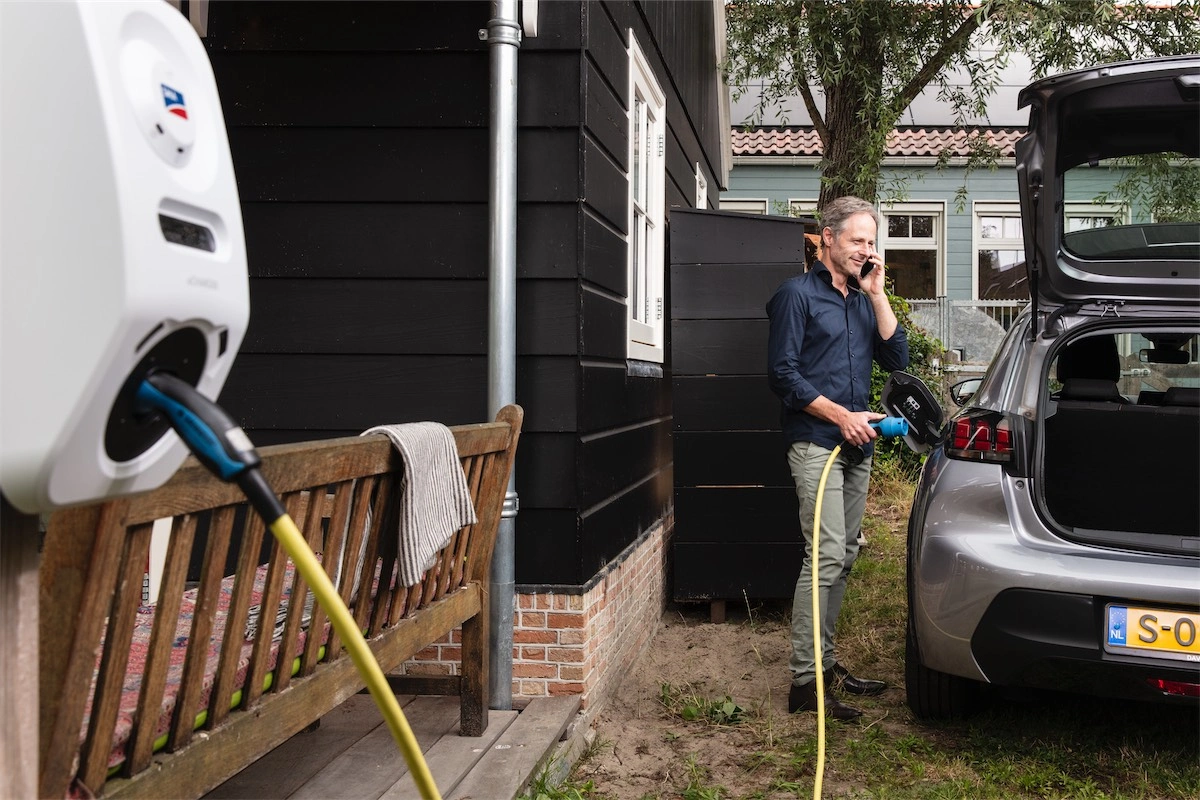
With negative tariffs you can fully charge your car and get paid for it too!
Charging the car at times when the price is negative is of course ideal: especially now that prices at the pump are so high, it's particularly nice that you can charge an electric car and get paid for it too! If all is well, this is also automatically arranged by the Sunny Home Manager (provided everything is correctly entered in ennexOS). We are curious about your experiences; if you want to share with us how it did/didn't work as expected, we would love to hear from you!
We don't expect heavily negative electricity prices on the EPEX market to occur very often: last year it only haoppened on a handful of days in total. But smart ways to deal with dynamic prices are of course welcome. You help keep the electricity grid stable and also help your own wallet. Zonnefabriek continues to look at what is and isn't possible: if we find something interesting, you'll be the first to know!