


English
 6 min Reading time
When more power is transported than the grid can handle, this causes grid congestion; blockage. To prevent this, grid operators want to charge higher electricity rates for busy times. But smart charging stations also help prevent congestion on the electricity grid. Such a charging station is therefore smart for your own wallet, but also for the stability of the power grid of all Dutch people.
'Grid operators are sounding the alarm!' is a message we have seen increasingly often in recent years. With recurring panic messages, they try to make the message sink in that our power grid is really going to get into terrible trouble unless we do what they propose. The latter usually comes down to shifting hundreds of millions to the grid operators so they can build more pylons, cables and transformer boxes. The idea is that this will create more space on the grid for all the electricity that needs to be transported.
The problem of the grid operators is the so-called 'grid congestion', or blockage. To get away from gas and gasoline, we are increasingly doing things electrically. Therefore, more electricity needs to be brought over the lines to our homes and businesses. At the same time, more decentralized generation has been added, in the form of solar panels on roofs. That electricity needs to go from the homes back into the grid. All that extra transport of energy over the existing cables can lead to problems.

On this map you can see the areas with grid congestion for consumption and return delivery in June 2024.
At the moment, grid congestion for the import of electricity is still manageable. The main problem occurs with the import of electricity at very sunny moments. In some streets, the grid can no longer handle all the supplied solar power properly. The result is that the voltage in the grid rises, from 230 Volts to for example 253 Volts. At that moment, the inverters automatically switch off, stopping the input and bringing the power grid back into balance. With the exception of missed electricity yield for a number of households with solar panels, this has little serious consequences. (If these households were to install batteries, they probably wouldn't miss any yield. But that's another story...).
What the grid operators are mainly worried about are problems with the consumption of electricity. With all the heat pumps and charging stations being installed at households and businesses, electricity consumption will increase considerably in the coming years. When a lot of electricity is consumed at the same time, the voltage on the grid drops. As a result, eventually perhaps a number of households will be completely without electricity at certain times.
It seems logical that new, thicker cables are needed to handle all that extra demand for electricity. But there are multiple roads to Rome.
Existing cables can actually handle quite a bit more energy, as long as that energy is not all requested at the same moment. That's why the grid operators plan to make the tariffs they charge for using the grid time-dependent. The idea is that higher grid tariffs should motivate consumers to turn off power-hungry devices at certain times so that more space remains for the rest. You can compare it to the financial incentives given by NS with peak and off-peak rates for train tickets. Or with the idea of road pricing for congested highways. Here you can read more about it.
An alternative scenario is that ultimately the grid congestion won't be so bad. It turns out that many people with electric cars have chosen to have a smart charging station installed. A charging station that can smartly respond to available solar power and cheap dynamic rates saves the owner a lot of money. At the same time, such a smart charging station relieves the electricity grid because the busiest times on the grid are usually avoided when charging. A smart charging station therefore helps with saving but also prevents grid congestion.
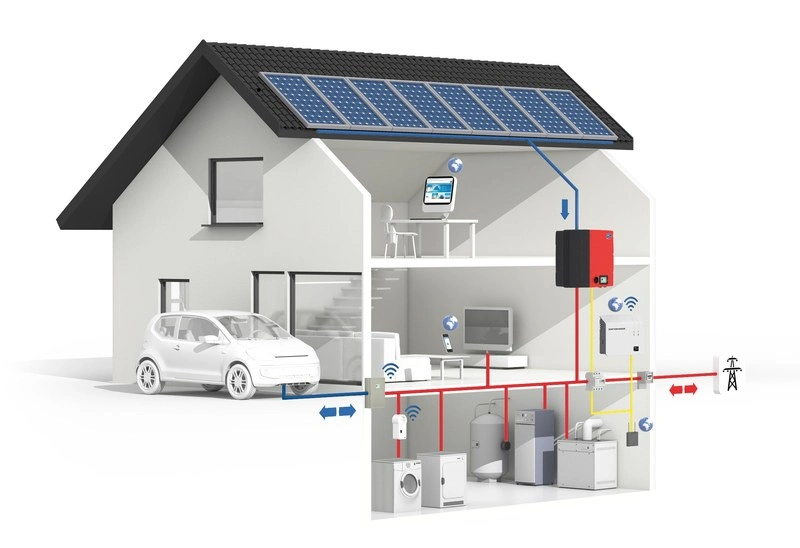
To understand how a smart charging station works, we can best compare it with its opposite: the 'dumb' charging station. Such a dumb charging station only knows two modes: on or off. '
On' is immediately full on, so charging at full power. The charging station continues to charge at full power until someone unplugs the car or the car's battery is full. The only advantage of such a dumb charging station over its smart big brother is that it is cheaper to purchase. But since a smart charging station earns much more money for people with solar panels and/or a dynamic electricity contract, with dumb charging stations it's really a case of cheap is expensive.
The smart charging stations from both SMA and Mennekes Amtron can charge on PV surplus. This is ideal for charging the car cheaply with self-generated electricity and to minimize return delivery to the grid. In the dark months of the year, it may be wise to set the percentage of solar power lower than the standard 100%. What that means and how it works, we explain here.
In addition, the SMA charging stations can also take dynamic tariffs into account. If the solar panels don't deliver enough, they still use grid power but then only charge at the lowest possible rates. How exactly that should be set up we explain here.
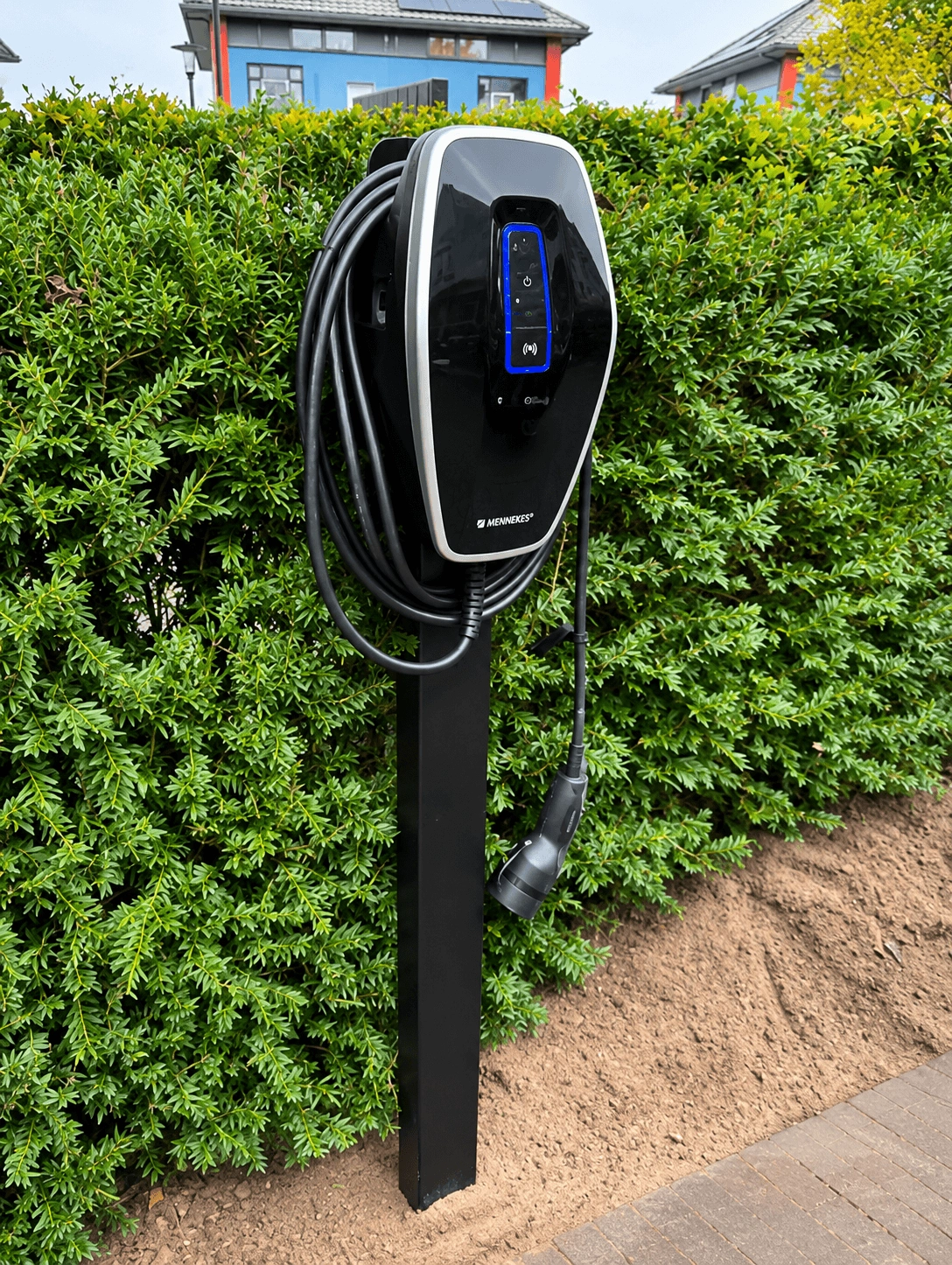
At a customer's location we installed a Mennekes Amtron on its own stand.
By giving priority to electricity from your own solar panels and by mainly using grid power when the market price is low, smart charging stations help prevent congestion on the electricity grid. By having a smart charging station installed, you not only help your own wallet, but also the stability of the power grid of all Dutch people: nice, right?
Interested in the possibilities? Click the button to get in touch for a no-obligation consultation.