


English
 5 min Reading time
 (Almost) everyone with solar panels wants a home battery nowadays, because with it
Win-win-win! But an important question many people have is: how much battery capacity do I actually need?
Battery capacity is usually expressed in kWh (kiloWatt-hour). An average iPhone contains a battery with perhaps only 0.02 kWh capacity; an electric bike battery is often around 0.5 kWh; and a fully electric car can have a battery of 50 kWh or more. But what is a good size for a home battery?
Important to realize is that a battery stores power for a relatively short duration: what goes in during the day you want to take out again in the evening or perhaps a day or 2 later, but not much longer than that. They are not suitable for longer-term storage because: they lose some of their stored power over time, and moreover they are too expensive to just fill up and then leave unused for longer periods. You want to charge and discharge them frequently because that's how you get the most profit out of them.
Therefore we need to look at how much energy we use approximately in a day: that's a good guideline to follow when choosing a battery. For an average 4-person household, where cooking and heating is still done with gas and there is no electric car parked outside, consumption is around 10 kWh per day (or 3500 to 4000 kWh per year: check your annual invoice to be sure!). That's also what our advisors would often recommend: for more than 50% of our customers, a home battery of 10 kWh is the best solution.

For the majority of our customers, a system like this, with 3 battery modules, is the best solution
But of course there are also people with (future) higher consumption. For example if you have an induction stove, if you have heat pumps, and especially if you charge one or more electric cars at home. Then you might prefer a larger battery system, but beware: for batteries larger than 20 kWh special rules apply!
These rules are in the so-called 'Publication Series Hazardous Substances' (PGS) number 37-1. For batteries larger than 20 kWh there are requirements including placing them in a separate room with a fire-resistant door; installing a smoke extraction system; and even adding a detector for hydrogen gas. In short: way too much hassle for a regular home installation. Therefore, in practice 20 kWh is the upper limit for home batteries.

The PGS-37-1 contains the rules that apply to the installation of larger lithium batteries
A battery that is too small is not a good idea: it fills up too quickly and contributes little to the system. Additionally, a home battery counts towards improving a home's energy label, provided two conditions are met: firstly, the battery's storage capacity must be at least 5 kWh, and secondly, it must be a permanently connected battery. So-called 'plug-in batteries' (which you simply plug into an outlet) do not count! With plug-in batteries there are quite a few limitations anyway, so we don't recommend them.
Many people have also had a backup option installed on their home battery. That's smart, because then you are assured of power if the grid fails, at least: as long as there is still something left in the battery. That's why some people set a minimum reserve on their battery. The battery then always remains charged to, for example, 10%, for possible emergency situations. Since that portion cannot be used for solar power, some people choose slightly more capacity than they would need for their day-to-day consumption (for example, an extra battery module).
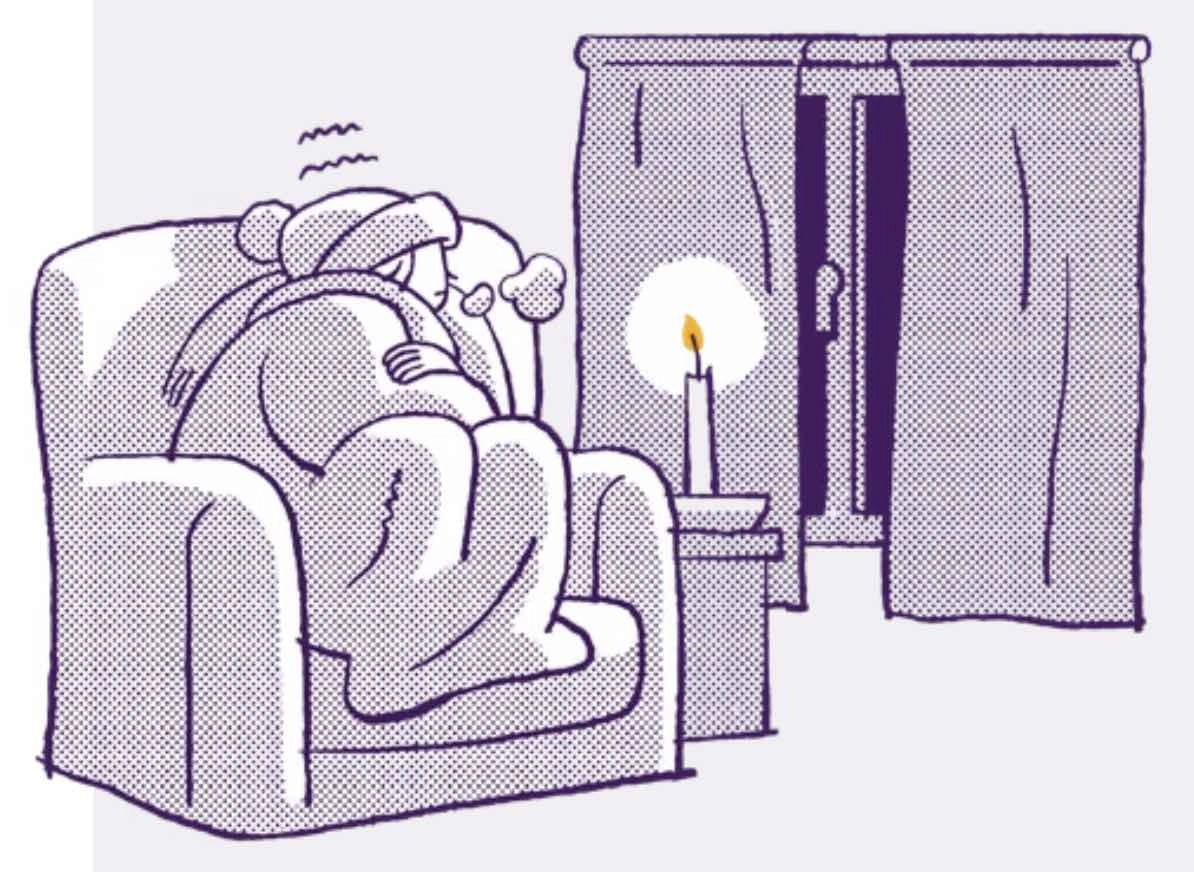
When the grid fails, it's nice to have backup power available (source: 'Think Ahead' - government booklet)
Due to the reasons mentioned above, the capacity of the home battery ideally lies between six and twenty kilowatt-hours. For SMA systems this means in practice: between 2 and 5 modules of 3.28 kWh each (six modules just don't fit on a hybrid inverter due to the voltage). That amounts to 6.5 - 16.4 kWh storage. NB: additional modules can always be added to the system later, should the chosen capacity prove too low.
Interested in a home battery for your home? Now is the moment to purchase one, because prices are good and the net metering scheme will disappear very soon. Therefore contact us quickly and make your system ready for the future!