

English
 6 min Reading time
 After a few weeks of testing, it's almost here: SMA systems with a Sunny Home Manager will soon be able to automatically read dynamic electricity prices from the EPEX spot market. This allows them to control batteries and charging stations based on the electricity price: an added benefit! Let's take a look at how it works and how you can configure it.
The connection between the Sunny Home Manager and the EPEX spot market means the Home Manager knows exactly what the electricity price is for every 15-minute period. If you have a dynamic energy contract, your energy rate is based on the EPEX price: the energy supplier usually adds about 2 cents on top of this for their own margin.
The Home Manager makes a complex calculation for the coming day: it considers the electricity price, the expected generation of the solar panels, and the expected energy consumption in the home. Electricity prices are usually lowest at night. Therefore, the Home Manager might decide to fully charge the battery overnight. However, it also wants to save some battery capacity for the day, when the solar panels are generating power. Therefore, it tries to estimate how much power will be used during the peak hours of the morning rush hour (approximately 7-10 am). It then charges this amount into the battery as much as possible. After the expensive morning rush hour, it will use the "excess" solar power to recharge the battery as much as possible, because you want to use that "free" solar power as much as possible for the expensive evening period (approximately 4:00-9:00 PM). And as soon as the battery is (almost) empty after the evening rush hour, it will start charging again in the middle of the night using cheap power from the grid for the next morning.
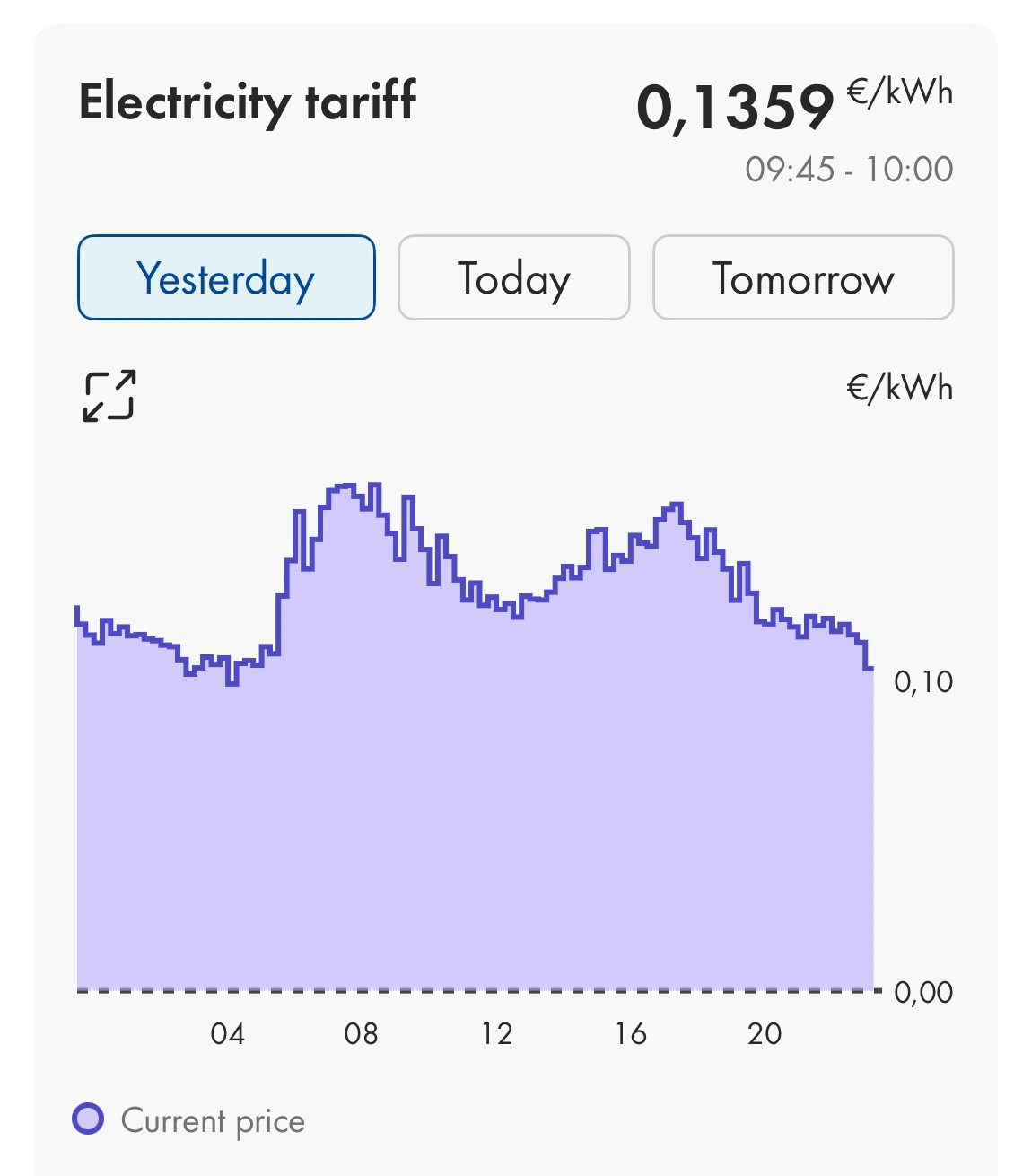
Figure 1: The SMA Energy App shows the dynamic electricity price from the EPEX spot market
Optimal control therefore depends on a good weather forecast and an accurate assessment of the home's energy consumption. The weather forecast is received via the monitoring portal: SMA gets the data from one of the major meteorological companies. Consumption is estimated based on the home's consumption patterns.
The Sunny Home Manager analyzes power consumption and, after a while, begins to recognize patterns, thanks to a "self-learning algorithm" (a kind of AI). For example, after a while, the system might learn that Monday mornings are always a period of high power consumption between 8 and 10, but that consumption on Friday afternoons is usually much lower. By combining the expected production and consumption, the system determines approximately how much battery capacity can be used to store cheap electricity from the grid. This capacity is then filled with grid power during the cheaper periods.
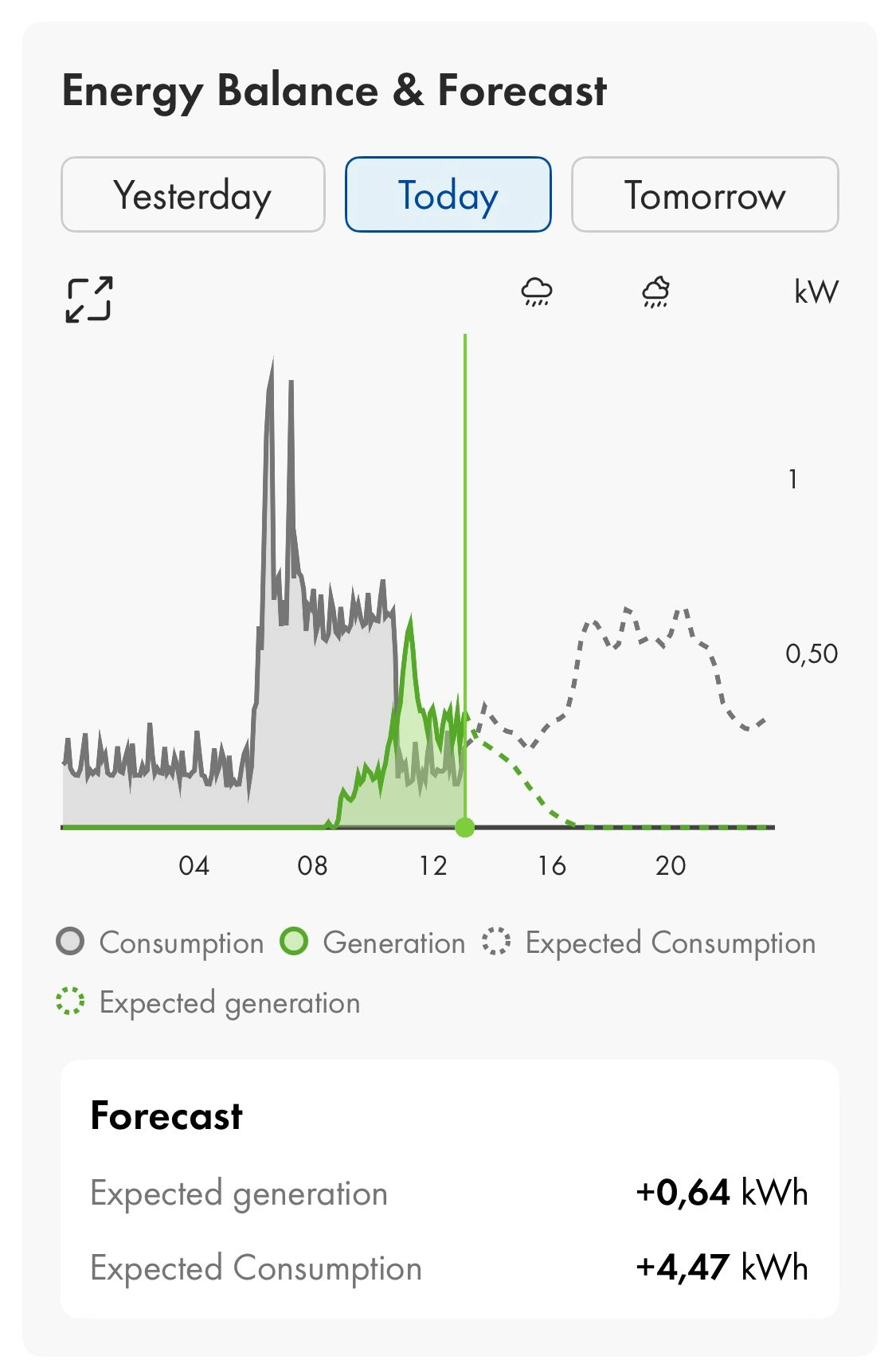
Figure 2: The system predicts generation and consumption for the coming hours and days
In the systems that participated in the beta tests, we see that significantly less power is drawn from the grid during peak demand periods, as shown in Figure 3 below. In contrast, grid power is primarily purchased at night to top up the battery. Sometimes, a little more power is needed during the day, when the solar panels contribute little due to inclement weather.
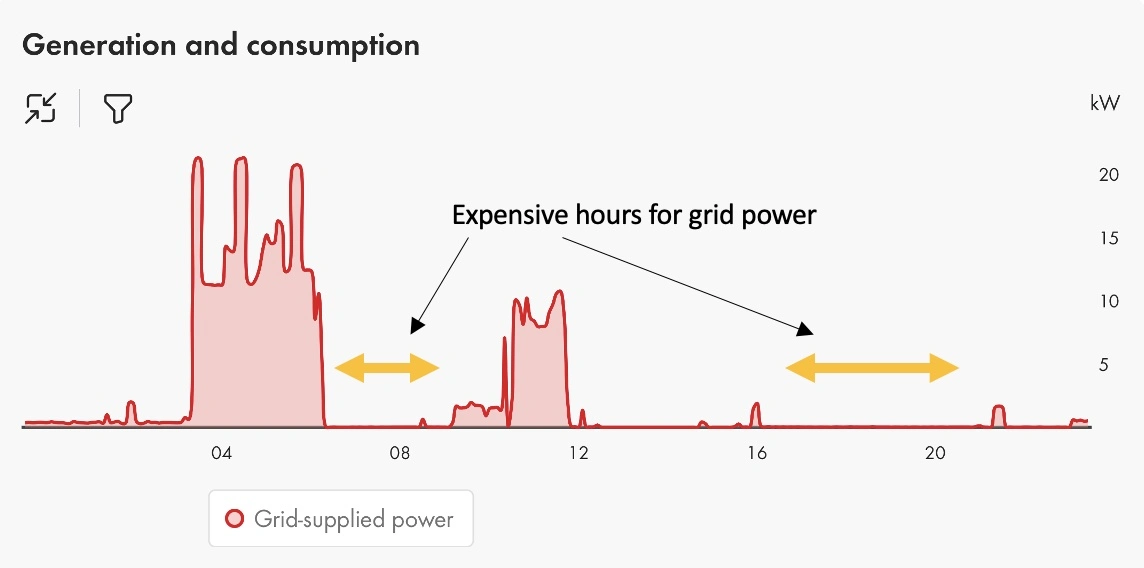
Figure 3: Grid power is only consumed when prices are low. Power consumption is avoided during peak hours, such as morning and evening rush hours, resulting in significant savings.
In the SMA Energy App, you can see it all: battery charge and discharge status, expected and actual yield, expected and actual consumption, and dynamic electricity prices. Currently it's not possible to see how much money you've actually saved, but hopefully, a newer version will provide that information in the future.
The Sunny Home Manager uses the electricity price not only to determine when the home battery needs to be charged, but also when the electric car can best be charged at the SMA EV charger. For example, users can now select the "Charging with cost limit" option in the SMA Energy App. The system then ensures that the car is only charged if the final electricity price does not exceed a (user-defined) limit. The price is a combination of the market price and the value of the electricity generated by the solar panels. Even when charging "with a target," the system takes the market price into account, ensuring your car is being charged in the most cost-effective way possible.
The new feature only applies if you have a dynamic energy contract with your energy supplier; otherwise, there's no point in setting it up (as with a 'fixed' or 'variable' energy contract). Once the feature is available to everyone (which isn't expected until sometime in March), you'll see an option appear on ennexOS that wasn't there before. By clicking on "Configuration" and then "Tariffs," you'll arrive at "Electricity Tariff." Currently, you can only choose between a fixed rate or a time-based rate—that is, different manually entered rates for different time slots. But in the near future, you'll have a third option, "Dynamic". The system will then use the EPEX prices as the basis, and you can add your energy supplier's surcharge to this.
We expect that many of our customers with home batteries will opt for a dynamic energy contract, and therefore also for this feature once it's available. This feature makes it easy to maximize your investment in a home battery, without having to manually schedule overnight charging. We'll likely have more details next month, so stay tuned and join this exciting next phase of the energy transition!