


English
 4 min Reading time
 In 2022, we welcomed many new customers at Zonnefabriek: everyone who saw electricity prices skyrocket due to the Russian invasion of Ukraine immediately wanted solar panels on their roofs. But now the situation has completely reversed: electricity prices have dropped back to normal, and the net metering scheme will end on January 1, 2027. What do you do with your beautiful new solar panels then? Should we just take them off the roof now?
The good news is that solar panels are still profitable, even at lower electricity prices and even after the net metering scheme is abolished. However, the payback period is a lot longer than it was a few years ago, at least if you don't have a home battery. With a home battery, most systems actually pay for themselves fairly quickly. We illustrate this with a few graphs.
Below is a graph of the situation for people without home batteries. When the panels were installed in 2022, the electricity price was very high. Had this continued, the system would have paid for itself in no time (payback period PBP1). However, in 2023, the electricity price dropped back to a "normal" level, pushing the payback period much further into the future (payback period PBP2).
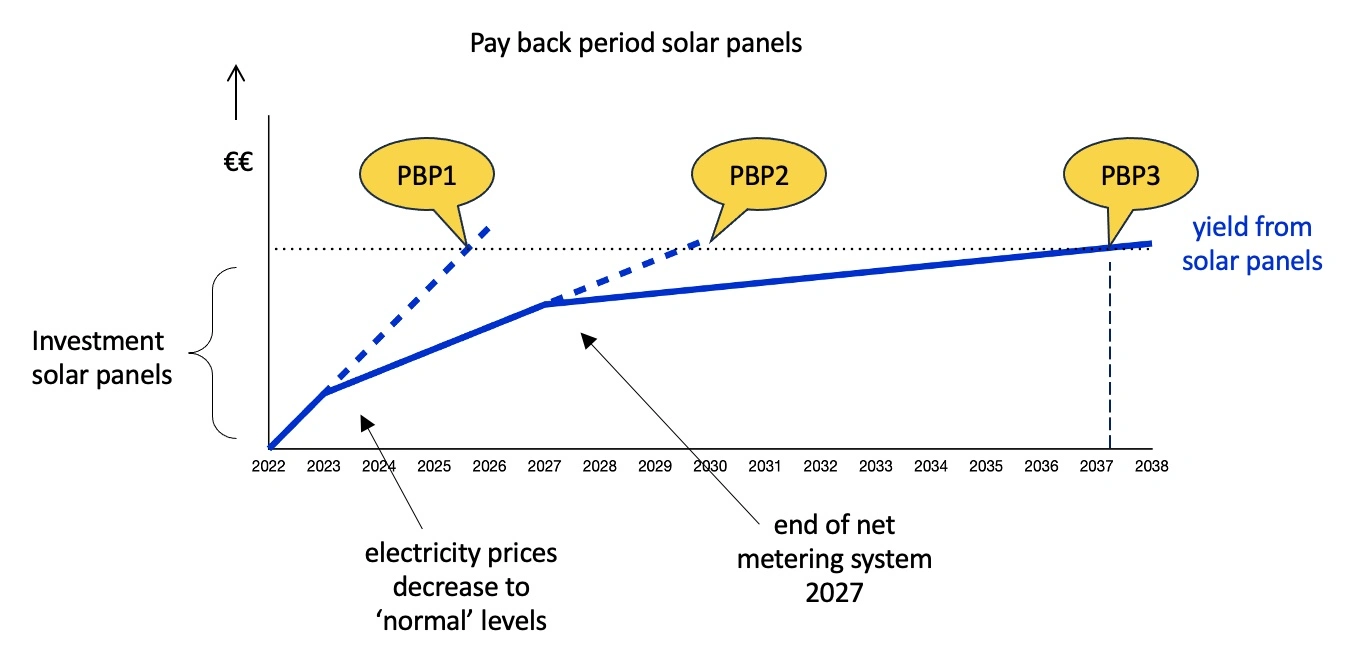
Figure 1: The payback period (PBP) for solar panels has been extended since 2022 due to lower electricity prices and the abolition of the net metering scheme
However, the abolition of the net metering scheme as of January 1, 2027, means the payback period will shift even further away (payback period PBP3). This means it will take a very long time before you recoup your investment. Fortunately, we can do something about that.
To maximize the return on investment after the net metering scheme is abolished, it's essential to use more of the solar power yourself. There are many ways to do this, but the simplest solution is to add a home battery. A home battery can also provide additional benefits by charging grid power when electricity prices are low. This shifts the payback period significantly to the left, as shown in this graph (payback period PBP4).
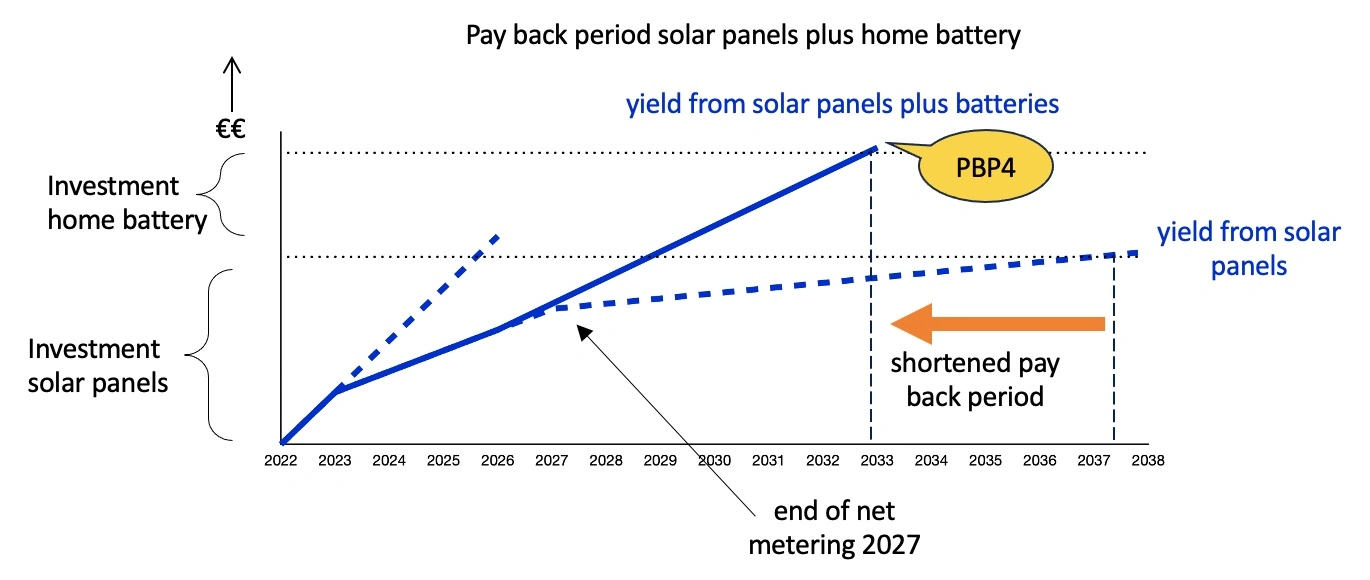
Figure 2: Adding a home battery ensures that - despite the extra investment - the payback period is achieved much faster; the period after that is pure profit
Despite the additional investment in the home battery, the system delivers so much more yield that the entire installation, consisting of solar panels and the home battery, pays for itself more quickly.
That's why more and more customers are contacting us to add home batteries to their solar power systems. Especially now that SMA will be enabling everyone to link their solar panels to market prices in March, we expect a rush to buy home batteries before January 1, 2027. Would you also like to secure your investments? Contact us; we're happy to help.